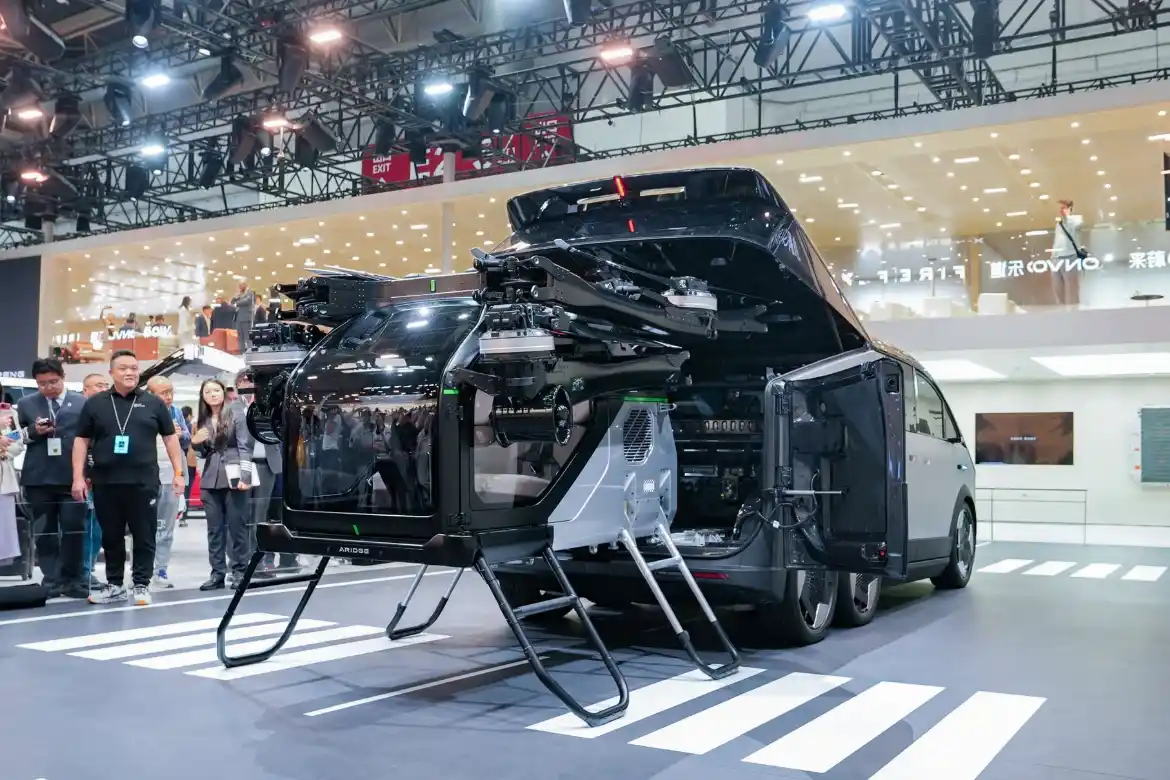
What if your car could carry a personal aircraft that you can deploy with the push of a button? The Land Aircraft Carrier by XPENG AEROHT combines a six-wheel electric ground vehicle with a detachable electric vertical take-off and landing (eVTOL) aircraft.
Designed to bring ground and air transportation together, this modular vehicle allows the aircraft to separate from the vehicle’s rear compartment and reconnect automatically. The system is designed to make transporting and preparing the aircraft more convenient.
A Six-Wheel Vehicle With a Detachable Aircraft
The Land Aircraft Carrier consists of two modules: a six-wheel ground vehicle and a two-seat electric aircraft.
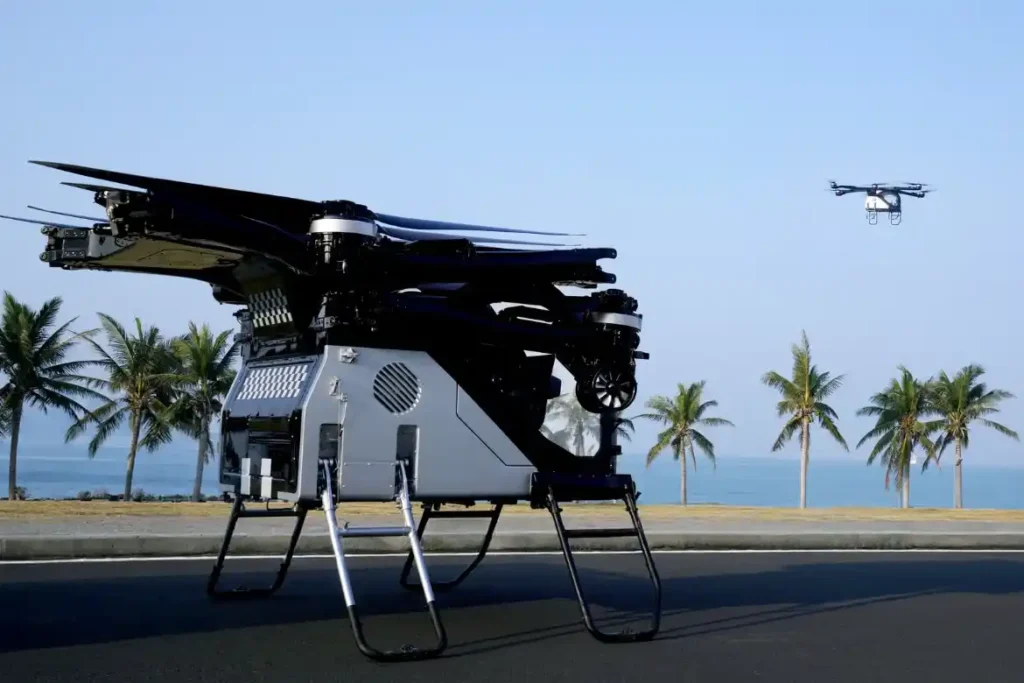
The ground vehicle, also known as the mothership, can accommodate four people. It features a 6×6 all-wheel-drive system and rear-wheel steering, combining passenger transport with the ability to carry the aircraft.
The aircraft is stored inside the vehicle’s rear compartment. With a single click, the aircraft can automatically separate from the vehicle, allowing the two modules to operate independently.
When the flight is finished, the aircraft can reconnect with the ground vehicle. XPENG AEROHT says the separation and reconnection process can be completed automatically within five minutes.
An Electric Aircraft With Six Rotors
The aircraft is designed for two occupants and uses an electric vertical take-off and landing system. This allows it to take off and land vertically without requiring a conventional runway.
It features six rotors with foldable arms and blades. The folding design allows the aircraft to fit inside the ground vehicle when it is not in use.
According to the stated specifications, the aircraft can fly for up to 30 minutes and cover a distance of up to 30 kilometres. Its maximum stated speed is 76 km/h.
These capabilities are intended for relatively short flights rather than long-distance air travel.
Autonomous and Manual Flight Modes
The aircraft offers two operating modes: autonomous and manual control.
In manual mode, the pilot operates the aircraft using a single control lever in the cockpit. A display screen provides information such as flight speed and altitude, helping the pilot monitor the aircraft during operation.
In autonomous mode, the aircraft supports automated flight functions, including path planning. This approach is designed to simplify aspects of flight operation.
The combination of manual controls and autonomous functions provides two different ways to operate the aircraft.
The Ground Vehicle Also Charges the Aircraft
One of the Land Aircraft Carrier’s key features is its mobile charging capability. The ground vehicle acts as a charging station for the aircraft, providing high-power recharging while the vehicle is driving or parked.
This integrated charging system is designed to reduce the need for a separate charging setup.
XPENG AEROHT states that a fully charged ground vehicle system can support up to six flights. The actual number of flights may depend on operating conditions and energy consumption.
Dual Battery Packs and Energy Density
The system uses a dual-battery-pack configuration, with a stated energy density of up to 255 Wh/kg.
Battery technology is important for both components of the Land Aircraft Carrier. The ground vehicle needs energy to transport passengers and carry the aircraft, while the aircraft requires sufficient stored energy for vertical take-off, flight, and landing.
Combining ground transportation, aircraft storage, and charging in one system is central to the Land Aircraft Carrier’s design.
Bringing Ground and Air Transportation Together
XPENG AEROHT’s Land Aircraft Carrier combines a six-wheel electric vehicle with a detachable two-seat eVTOL aircraft. The ground vehicle carries four people, transports the aircraft, and provides charging support, while the aircraft offers short-distance electric flight.
With automatic separation and reconnection, autonomous and manual flight modes, six rotors, and a stated flight range of up to 30 kilometres, the system presents a different approach to personal transportation.
Instead of driving a car to every destination, users could potentially drive to a suitable take-off location and continue part of their journey by air, subject to applicable regulations and operating requirements.
The Land Aircraft Carrier brings these two modes of transport together in one modular system, combining the practicality of a road vehicle with the additional mobility offered by an electric aircraft.
Source: Xpeng AeroHT, Aridge

