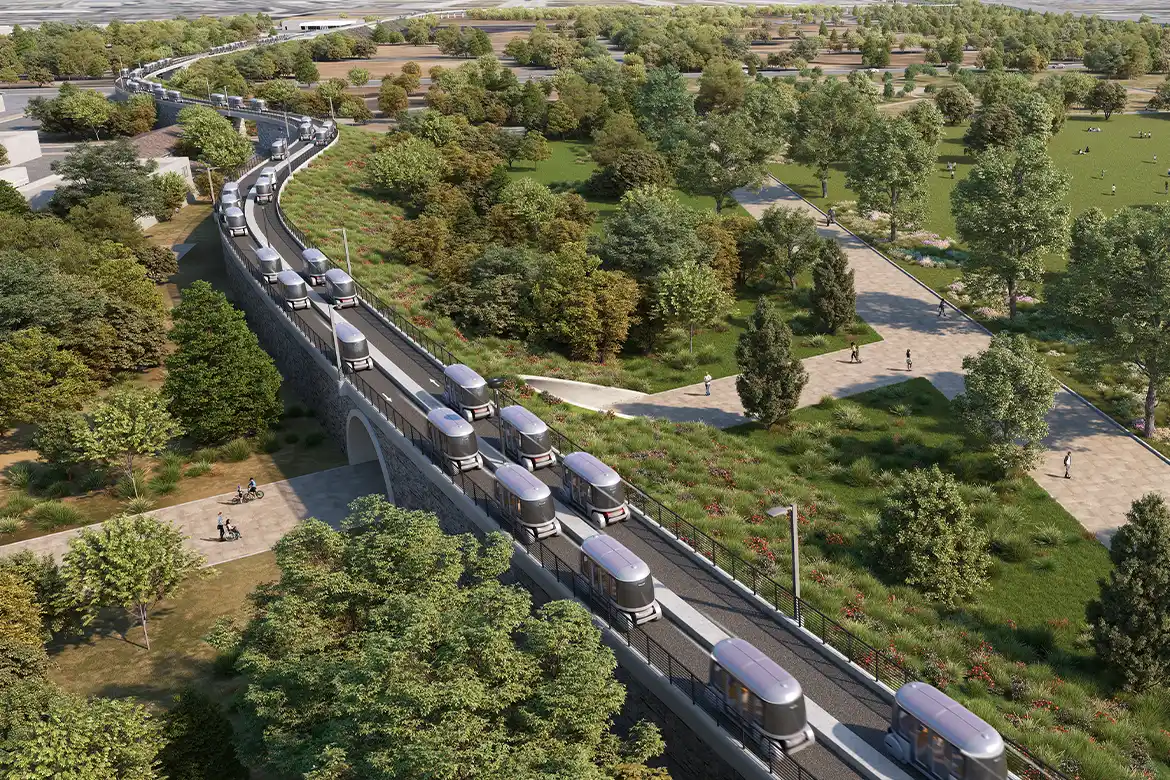
Cities around the world are struggling with traffic, rising construction costs, and public transport systems that no longer meet modern needs. Rail projects take many years to complete and require huge budgets. Bus systems are flexible but often slow, crowded, and limited in capacity. Glydways introduces a new way to think about mass transit by combining the capacity of rail with the affordability of buses.
A Narrow Guideway With Big Potential
Glydways has developed a high-capacity Automated Transit Network that uses small autonomous electric vehicles running on a very narrow dedicated guideway. This guideway is just 2 meters wide, which is far smaller than traditional rail or road infrastructure. Because of this compact design, cities can build the system without major land acquisition, heavy construction, or long project timelines.
On-Demand Travel From Point A to Point B
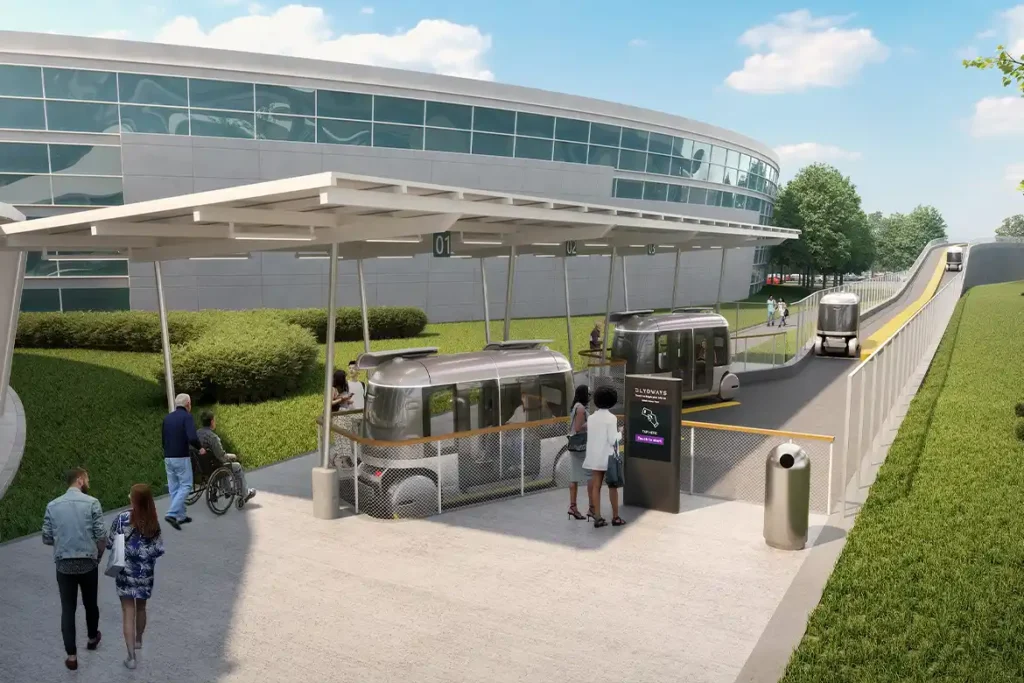
The passenger experience is simple and modern. A rider requests a trip using a mobile app. A vehicle arrives automatically and takes the passenger directly from point A to point B. There are no fixed stops, no waiting for scheduled departures, and no driver. The vehicle can be used privately or shared with a small group traveling together. This creates a personal and direct travel experience that is very different from buses and trains.
Managed by AI With GlydwaysOS
The entire network is managed by an AI system called GlydwaysOS. This system controls how vehicles move on the guideway, prevents congestion, and ensures smooth traffic flow. Because the vehicles are autonomous and centrally coordinated, the system works like a digital network rather than a traditional transport line. It operates continuously, twenty-four hours a day, without the need for drivers.
Rail-Like Capacity Without Rail Costs
Glydways says that when the system is scaled, it has the potential to move up to 10,000 people per hour. This level of capacity is similar to rail systems, but without the massive infrastructure costs. There are no heavy tracks, large stations, overhead lines, or expensive signaling systems. With lower construction and operational costs, the system can operate without requiring ongoing subsidies.
Flexible for Cities, Campuses, and Airports
The narrow guideway design also makes the system highly flexible. It can be installed at ground level or elevated when needed. It can fit into existing city layouts where rail systems are not practical. This makes it useful not only for large cities but also for airports, business districts, campuses, and growing urban areas.
Scalable and Future-Ready
Glydways is designed to be scalable. Cities can start with a small network and expand it as demand increases. This allows for gradual investment instead of committing to a large, expensive project all at once. The system meets modern transportation needs by being on-demand, direct, personal, and affordable.
A New Model for Public Transport
By combining autonomous electric vehicles, AI coordination, and compact infrastructure, Glydways offers a new model for public transport. It delivers rail-like capacity at bus-fare prices while avoiding the long construction timelines and high costs of traditional transit systems. This approach redefines what mass transit can look like in modern cities.
Source: Glydways

