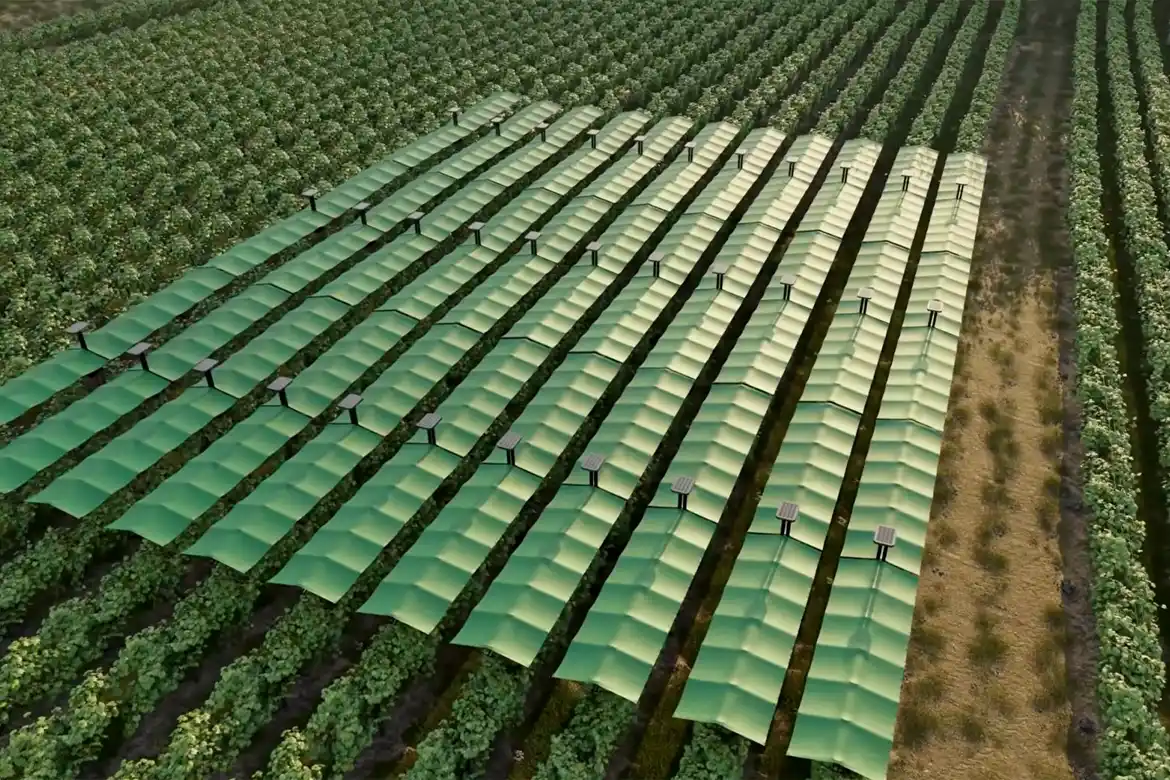
This is not a greenhouse. It’s a smart robotic canopy system designed for vineyards. Most of the time, the system stays hidden. But when frost, hail, or extreme heat is detected, the canopy automatically deploys over the grape vines to protect the crops.
Instead of workers rushing outside to cover the vineyard before a storm, the system reacts in real time using weather monitoring and automated controls.
Designed for Climate-Resilient Agriculture
The system is designed as a smart canopy for climate-resilient farming. It uses a 6-meter canopy that deploys only when needed through targeted algorithmic activation. Once weather conditions improve, the canopy retracts again automatically.
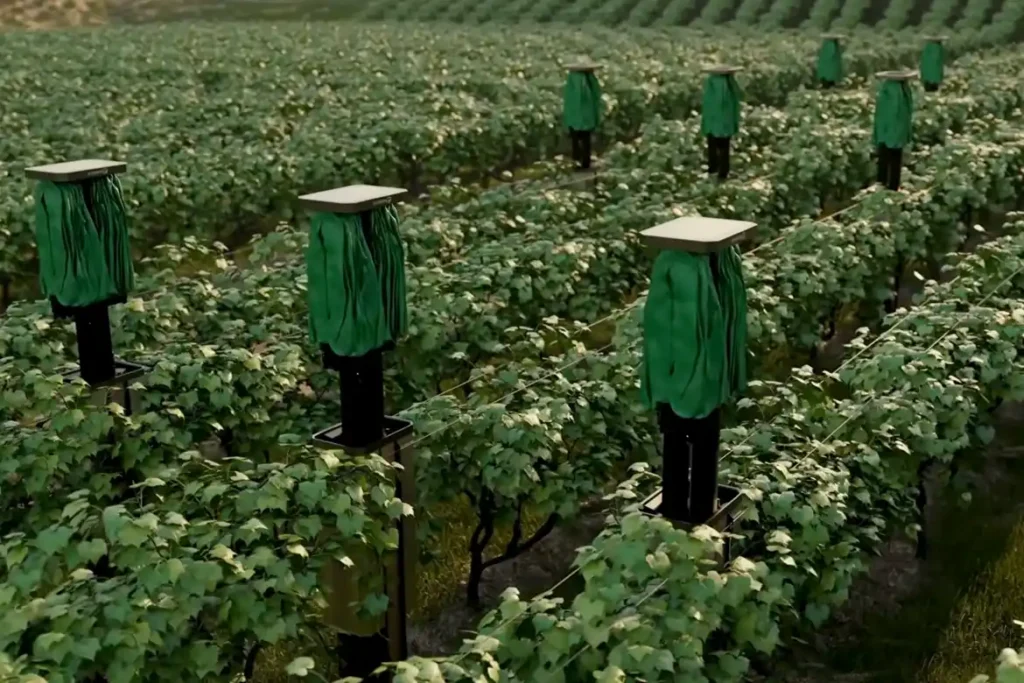
Because the structure stays hidden most of the time, it avoids the appearance and obstruction of large permanent roofing systems.
Retracted Most of the Time
One of the most unusual parts of the design is how compact it becomes when not in use. The canopy remains retracted 98% of the time inside a narrow 22 × 35 cm housing. This allows the vineyard to remain open for sunlight, airflow, and normal operations.
The design is also tractor-friendly and integrated into the landscape, making it practical for daily vineyard work.
Solar Powered and App Controlled
The system runs using solar power and can respond automatically to weather alerts. Farmers can also manage deployments manually or schedule them through the BIENESIS app.
The app provides automated weather alerts and deployment recommendations, allowing vineyard owners to react quickly to changing climate conditions without needing constant on-site monitoring.
Farming Technology Is Becoming More Automated
Systems like this show how agriculture is becoming more automated and weather-responsive. Instead of building large permanent structures, this approach keeps protection hidden until it is actually needed.
By combining automated deployment, compact design, solar power, and weather monitoring, the smart vineyard canopy offers a different approach to protecting crops from changing climate conditions.
Source: Bienesis

